

It’s a special moment when you buy a luxury home in Mumbai. You feel emotional while seeing the result of years of planning. But along with the excitement comes responsibility. Buying property here isn’t just about paying money. It also involves paperwork and legal checks.
With high property prices, redevelopment projects, and complex rules, skipping legal checks can cause long-term trouble. A missing document or overlooked approval can lead to loan issues, resale problems, or even legal disputes later.
While location, amenities, and interiors matter, legal checks matter more. Proper verification helps protect your investment and keeps things stress-free in the long run if you are looking to buy a luxury home.
Here are five legal checks you should always complete before signing any agreement. Let’s check.
1. Verify Clear and Marketable Title
Consider this as a priority when buying a property. A clear title means the seller owns the property and is legally allowed to sell it. It also makes sure that no one else can claim owernship later. If this isn’t clear, disputes can arise even after you’ve paid the full amount.
What you should check:
- Ownership papers, like sale deeds or inheritance documents
- Past ownership details, preferably covering the last 25 to 30 years
- Any signs of shared ownership, family claims, or ongoing disputes
In Mumbai, properties often change owners because of redevelopment or inheritance. That’s why having a property lawyer review the documents really helps. They can spot issues that are easy to miss.
A clear title gives you peace of mind and also makes resale or loan approvals much smoother later on.
2. Check RERA Registration and Builder Credentials
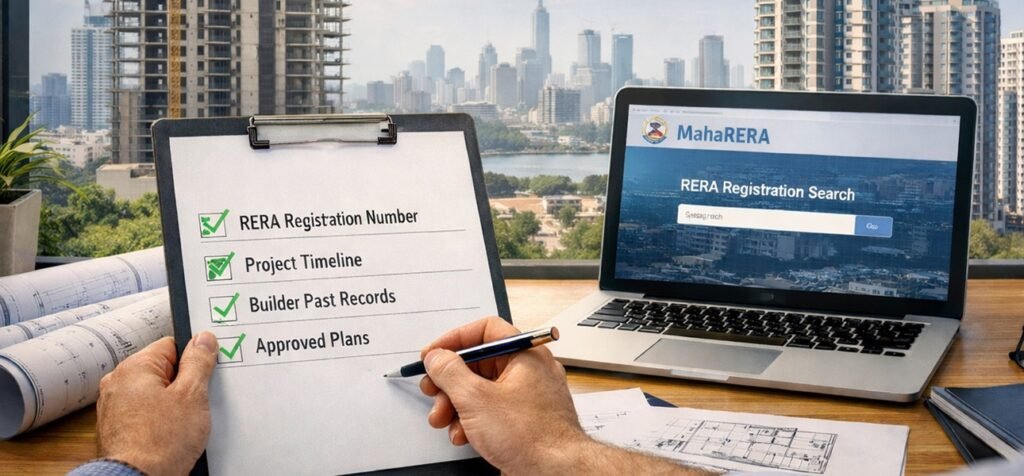
RERA aims to bring more clarity and fairness to property purchases. Any project under construction or recently finished must register with the Maharashtra Real Estate Regulatory Authority.
You should check:
- The project’s RERA registration number
- Expected completion and handover timelines
- Approved layout and floor plans
- The builder’s past project record
You can find all this information on the MahaRERA website with ease. Keep in mind, even luxury apartments must follow RERA rules.
3. Confirm Approved Building Plans and Commencement Certificate (CC)
The local authority issues Commencement Certificate before building starts. This shows that the project meets zoning rules, FSI limits, and environmental standards.
Buying a property without a CC can create problems like:
- Home loan rejection
- Notices or penalties from authorities
- Construction delays or stop-work orders
You should also make sure that the flat you’re buying matches the approved plan. This covers floor number, carpet area, and layout. Don’t just trust brochures or spoken promises. Always look at official approvals.
4. Confirm Occupancy Certificate (OC)
The local authority hands out an Occupancy Certificate once a building is finished according to approved plans. This document shows that the building is safe and ready for people to live in. However, many people end up living in buildings without an OC, which may lead to problems down the road.
You might run into:
- Issues with water or electricity connections
- Problems when applying for a home loan or selling the property
- Legal trouble with local authorities
If you’re buying a ready-to-move-in home, always ask for the Occupancy Certificate. It protects your legal right to live in the property.
5. Check Encumbrances, Litigation, and Society Documents
A property should be free from legal and financial burdens. An encumbrance check helps confirm that there are no loans, mortgages, or court cases linked to the property.
If you’re buying a resale home in a cooperative society, also verify:
- Society share certificate
- No Objection Certificate
- Maintenance dues clearance
- Redevelopment agreements, if applicable
These checks matter even more for older buildings and redeveloped properties. They make sure you don’t end up dealing with problems that belonged to someone else.
Why Legal Due Diligence Matters for Premium Properties
Luxury homes often involve extra documentation. This can include joint development agreements, multiple ownership structures, or long-term leasing arrangements. As a result, even a minor oversight like a missing approval or an unsigned document can hold up possession or lead to future resale problems. Through legal checks, you can avoid unexpected issues and protect your investment from the beginning.
Common Mistakes Buyers Make
Most property issues happen because buyers assume everything is fine.
Some common mistakes include:
- Trusting verbal promises without written proof
- Skipping legal review to save time or money
- Ignoring redevelopment clauses in society papers
- Not checking approvals independently
Being wise and avoiding these mistakes will help you buy property safely in Mumbai.
To Sum Up
Buying property in Mumbai can be a great decision when backed by proper legal checks. From ownership verification to approvals and certificates, these five steps help protect your money, reduce stress, and avoid future disputes.
Multistar, being one of the leading real estate developers, supports you through every stage of legal due diligence. If you’re thinking of buying your luxury apartment, our experts help ensure clarity, meet compliance, and gain peace of mind.
Looking to buy your new home? Contact Multistar today to take the first step towards owning your dream home with confidence.
FAQs
1. What are the most important documents to check before buying a property in Mumbai?
Make sure to examine the sale deed, title papers, RERA registration approved plans, Commencement Certificate, and Occupancy Certificate.
2. Is it safe to buy a home without an Occupancy Certificate?
Homes lacking an OC might run into problems with utilities, resale, and getting home loans approved.
3. How long does property legal verification usually take?
It takes anywhere from a couple of days to several weeks, based on the property’s history and how complex the documents are.
4. Are legal checks necessary for newly launched projects?
Yes. New projects should still be verified for RERA registration, land ownership, and approvals.
5. Can a lawyer help negotiate property agreements?
Yes. A lawyer can review clauses, highlight risks, and help negotiate better terms.